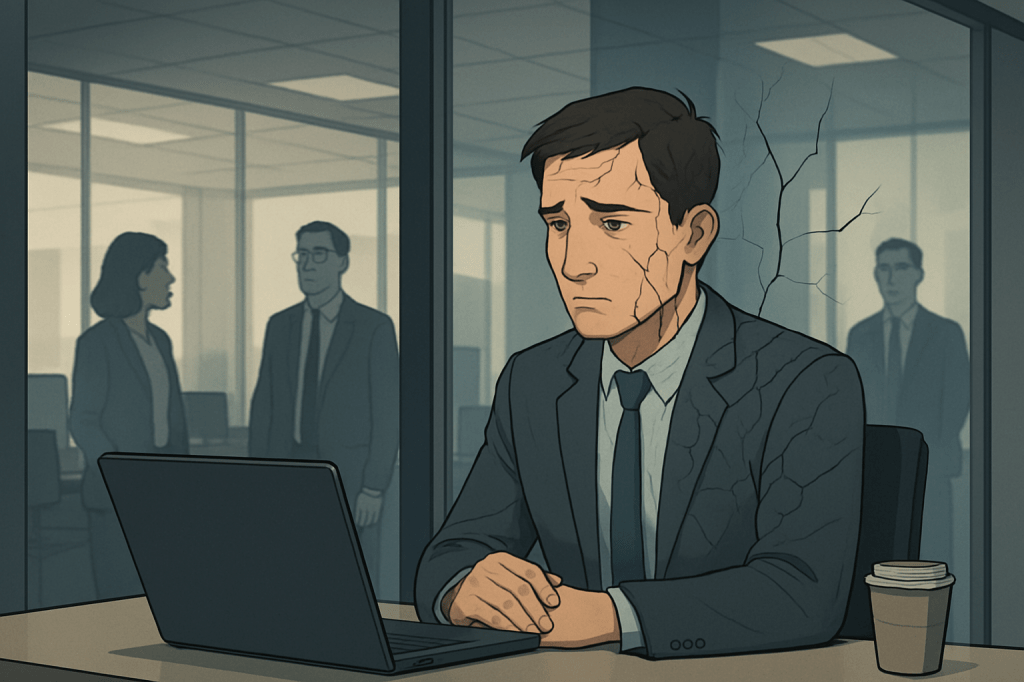
Every morning, Alex walks into the office with a knot in their stomach. It’s not the work—it’s never been the work. Alex thrives on challenges, enjoys learning, and takes pride in doing things well. But the weight pressing down? That’s the manager. The one who micro-manages to the point of suffocation. The one who takes credit when things go right and assigns blame when things go wrong.
Alex knows it’s a problem. So does everyone else. But in this environment, calling it out means career suicide. And leaving? Not an option right now.
When You Can’t Leave, But You Can’t Breathe Either…
Staying in a situation like this feels like living in survival mode—constantly bracing for the next blow while trying to maintain composure. People on the outside might say, “Just leave!” But life is rarely that simple. Financial stability, family obligations, or even the lack of immediate opportunities can chain someone to an environment that’s silently draining them.
So, Alex copes. Not in the healthiest ways, at first—suppressing emotions, overworking to avoid confrontation, or retreating into numbness just to make it through the day. But over time, Alex discovers that surviving and maintaining mental stability in a toxic environment takes more than endurance. It takes strategy.
Resilience Isn’t Just Endurance—It’s a Skill
When leaving isn’t possible, building resilience becomes non-negotiable. And resilience isn’t about toughing it out or suppressing feelings. It’s about equipping yourself with tools to protect your mental and emotional bandwidth. Here’s what Alex learned:
✅ Detach Emotionally (Without Disengaging Professionally)
Alex realized that taking things personally gave the manager power they didn’t deserve. By mentally stepping back and viewing situations as transactions, Alex reclaimed emotional control. It’s not coldness—it’s self-preservation.
✅ Set Boundaries Where Possible
Even in powerless situations, micro-boundaries can be a lifeline. Alex started establishing small limits—whether that was declining unnecessary extra tasks or blocking out short mental breaks during the day. Every little act of boundary-setting became an act of self-respect.
✅ Find Micro-Wins for Mental Momentum
Staying motivated in a toxic environment is tough, but Alex learned to focus on tiny victories. Completing a task well, getting positive feedback from a peer, or even just maintaining professionalism under pressure became markers of success that no manager could steal.
✅ Cultivate an Internal Mentor
When external support was lacking, Alex became their own guide. Journaling thoughts, reflecting on what they could control, and visualizing future opportunities helped maintain focus on the bigger picture.
✅ Anchor in Support Systems (Even If They’re Outside Work)
Alex leaned on a small but reliable circle—friends who offered a listening ear and family who reminded them of their worth beyond the office walls. It’s okay to vent, to feel, and to ask for support.
You Don’t Have to Walk This Alone
Alex’s story isn’t unique—it’s a silent reality for many. If you’re in a space where leaving isn’t an option, but staying feels like losing a part of yourself, know this: resilience can be built, and mental stability can be maintained.
And if you’re ready to explore strategies that fit your situation—or just need someone who understands—I’m here. Subscribe for more insights, strategies, and resources to navigate challenging environments. Or, if you’re ready to talk, reach out.
Because surviving is one thing—thriving is another. Let’s aim for both.
 Lead With Your Heart
Leave a comment