
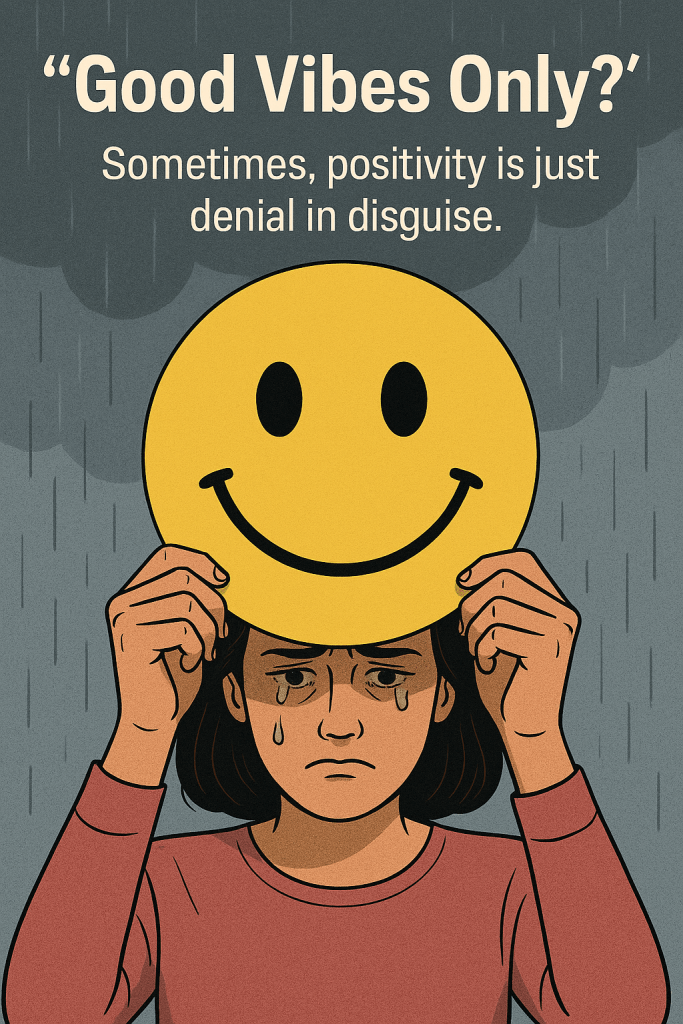
May is Mental Health Awareness Month—and while companies roll out wellness checklists and meditation apps, there’s an elephant in the breakroom: toxic positivity. It’s the sneaky culture of forced smiles, silenced struggle, and glitter-dusted gaslighting. And if you’ve ever walked away from a team huddle feeling more broken than before—it’s not just you. It might be this.
🧩 What Is Toxic Positivity?
Toxic positivity is the relentless pressure to “stay positive” no matter the circumstances. It masquerades as motivation but often invalidates genuine emotional experiences—including signs of burnout, depression, and anxiety.
😶🌫️ “You Might Be Experiencing It If…”
- You hear “just be grateful” when voicing real struggles
- You’re told “we all have bad days” after opening up about mental health
- Feedback loops feel emotionally sanitized—like pain isn’t allowed
- You’re praised for being “strong” when you really just need support
- Venting or expressing frustration gets labeled as “negativity”
🚩 Why It’s Dangerous During Mental Health Awareness Month:
- It discourages people from seeking help—they think they just need a better attitude
- It makes those battling depression or anxiety feel isolated, ashamed, or “dramatic”
- It fuels imposter syndrome: “Everyone else seems happy. Why am I not?”
- It undermines any real wellness initiatives by masking pain with platitudes
💬 The Impact on Workplace Culture:
- Psychological safety plummets
- Authenticity takes a backseat to performance
- Real connection disappears
- People suffer in silence
✨ What Real Support Sounds Like Instead:
- “That sounds really tough—do you want to talk more about it?”
- “I’m here if you need time or space.”
- “It’s okay not to be okay.”
- “How can I support you today?”
🛑 Toxic Positivity Isn’t Wellness—It’s Denial.
Mental health awareness means honoring all emotions, not airbrushing the hard ones. Instead of drowning our coworkers in Pinterest quotes, let’s check in with them. Let’s lead with presence, not perfection.
If you’ve ever walked away thinking “Am I the only one not okay?”, you’re not alone—and you’re not “crazy.” You might just be buried under a culture that fears discomfort more than it fears disconnection. Let’s change that. Starting now.
💬 Need more survival tips or just someone who gets it? Like, share, or subscribe—and don’t hesitate to reach out.
 Lead With Your Heart
Leave a comment