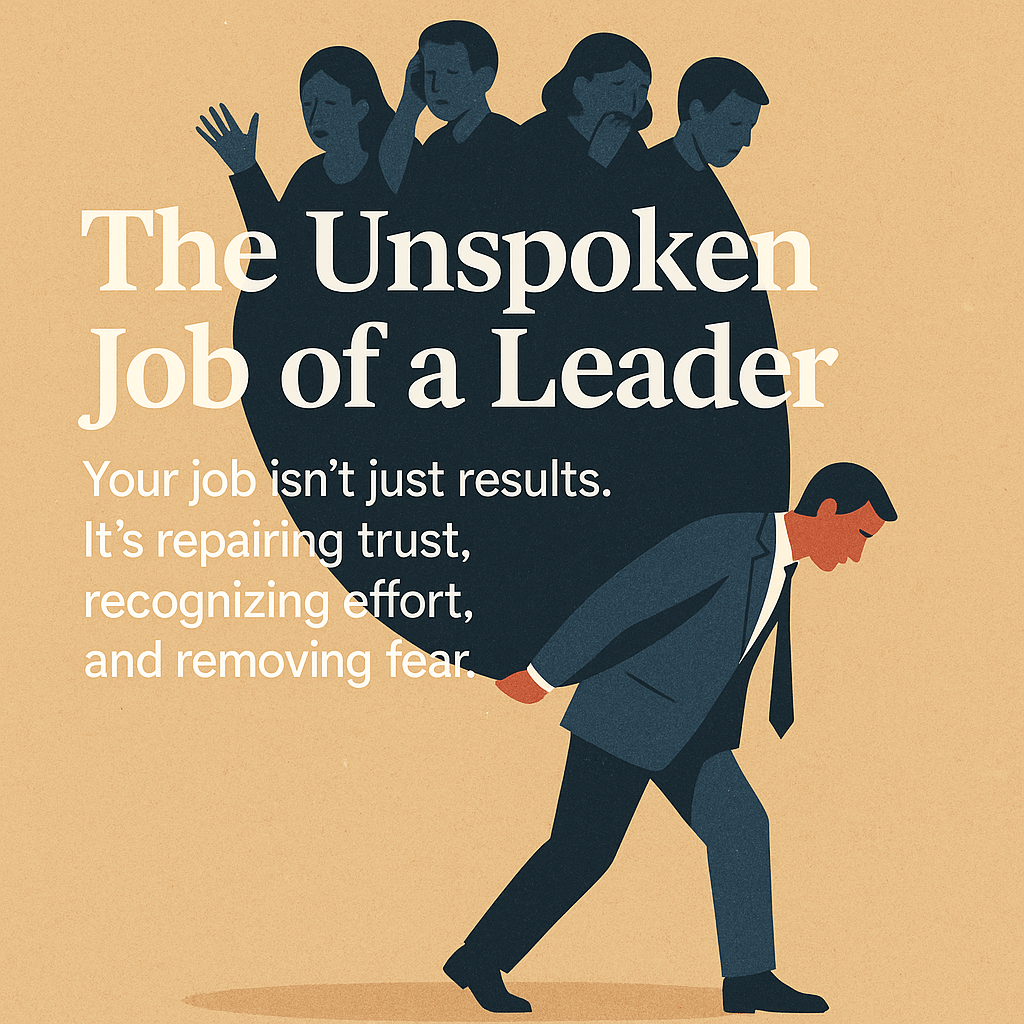
Your job isn’t just results. It’s repairing trust, recognizing effort, and removing fear. Written By Cari Borden
Somewhere along the corporate climb, the definition of leadership got hijacked by quarterly results and performance metrics.
And sure, results matter.
But great leaders know that how you get there matters even more.
Because here’s the truth most leadership manuals forget to print in bold:
👉 The unspoken job of a leader is emotional labor.
It’s repairing what’s been broken, naming what others ignore, and creating safety in spaces that usually breed fear.
Let’s break down the invisible labor of leadership, and what it actually looks like in behavioral terms:
1. 🧠 Repairing Trust
Poor leaders:
- Avoid the hard conversations.
- Gloss over past missteps.
- Use “we’re a family” to mask dysfunction.
Great leaders:
- Own the company’s missteps, even if they weren’t at the helm when they happened.
- Offer transparency, not just reassurance.
- Say, “I know trust was broken before. Here’s how I’m rebuilding it.”
🛠 Behavior tip: When inheriting a new team, ask them what trust looks like to them. Then deliver consistently.
2. 💡 Recognizing Effort
Poor leaders:
- Celebrate only the outcome.
- Forget names but remember errors.
- See burnout as commitment.
Great leaders:
- Notice the late nights and early mornings, even when things go sideways.
- Celebrate courage, not just perfection.
- Say, “I see how hard you tried, even if it didn’t land. That matters.”
🌱 Behavior tip: Build a weekly habit of naming one effort someone made that no one else noticed.
3. 🔒 Removing Fear
Poor leaders:
- Weaponize silence.
- Allow psychological safety to be optional.
- Treat feedback as insubordination.
Great leaders:
- Normalize tough conversations.
- Acknowledge mistakes as part of growth.
- Say, “You’re safe to speak up, even if it challenges me.”
🔥 Behavior tip: Start meetings by reminding your team they can challenge ideas, not people, and that discomfort means progress.
Let’s Be Real…
If your only leadership metric is performance, you’re just a manager in a fancier chair.
But if you’re willing to take on the invisible labor, of healing, seeing, and freeing others, you’re leading.
And if you’re not sure how your own leadership stacks up?
That’s not a flaw; it’s a sign of emotional intelligence.
👣 Ready to Go Deeper?
✔️ Take the Leadership Quadrant Assessment, designed to help you identify your natural strengths and your blind spots when it comes to emotional safety, influence, strategy, and integrity.
(DM me for access—it’s not on the shelf, it’s in my toolkit.)
✔️ Or, if you’re ready to build trust-driven leadership habits with coaching that cuts the fluff and gets to the point—
📩 Find me on Fiverr for 1:1 leadership sessions that go beyond buzzwords.
Call to Action: 🗣 Share This With a Leader Who Gets It
Because if more leaders took the invisible work seriously, maybe we’d have less resignations and more respect.
 Lead With Your Heart
Leave a comment