Written By Cari Borden
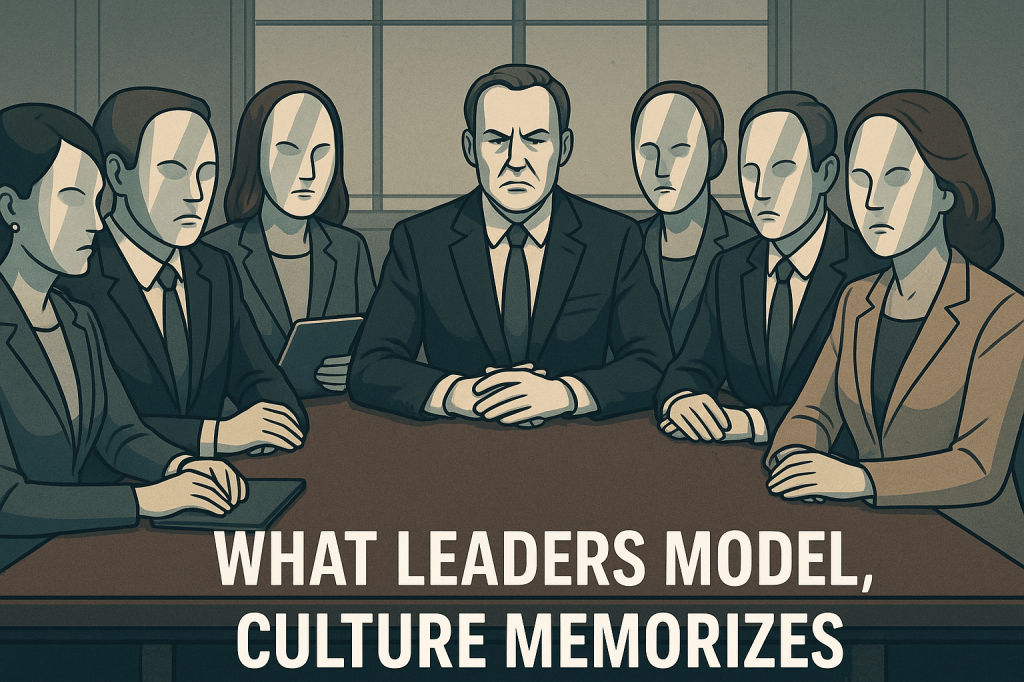
There’s something fascinating, and a little terrifying, about how even the most dysfunctional habits can become part of a company’s DNA. We call it organizational socialization, that invisible onboarding process where people don’t just learn the rules, they learn what’s really rewarded.
But what happens when the ones doing the teaching are high-level leaders with bad habits? When shortcuts, favoritism, or “that’s just how we do things here” becomes the cultural blueprint for everyone else?
1. The Quiet Classroom of Culture
Organizational socialization isn’t limited to new hires. It’s the subtle curriculum that even seasoned executives follow to survive. Leaders observe what gets applauded, the loudest voice, the fastest deliverable, the one who says “yes” the most, and adapt accordingly. Over time, those habits calcify into culture.
2. When the Wrong Lessons Get Institutionalized
When high-level leaders exhibit toxic patterns, micromanagement, bias, manipulation, or performative empathy the behaviors don’t just persist; they scale. Their direct reports mimic them, often unconsciously, and the organization begins to normalize dysfunction as “drive” or “high standards.”
Soon, bad behavior isn’t punished, it’s promoted. And that’s how psychological safety dies quietly behind glass walls of “excellence.”
3. The Ripple Effect on Emerging Leaders
Future leaders are watching. When they see toxic behaviors rewarded, they learn that integrity is optional. The result? A new generation of “leaders” who think managing up matters more than leading well.
This is how organizations lose their moral compass, one skipped accountability conversation at a time.
4. Re-Socializing Leadership
Fixing it starts with re-socialization, intentionally unlearning what’s been normalized.
- Audit your “unwritten rules.” What do people actually get rewarded for?
- Challenge cultural assumptions. Who benefits most from “how we’ve always done it”?
- Model transparency. Make it safe to say, “This isn’t working.”
- Develop leadership onboarding. Even seasoned execs need to learn your culture; not assume they’ll define it.
Closing Reflection / CTA:
Culture is learned, not laminated. If bad habits can be taught, so can better ones. The question isn’t whether leaders are shaping the culture, it’s whether they’re aware of what they’re teaching.
✨ Want to build leaders who model healthy socialization instead of toxic mimicry? Find me on Fiverr for leadership coaching or visit LeadBoldly.blog for more resources that challenge how we think, lead, and grow.
 Lead With Your Heart
Leave a comment