Written by Cari
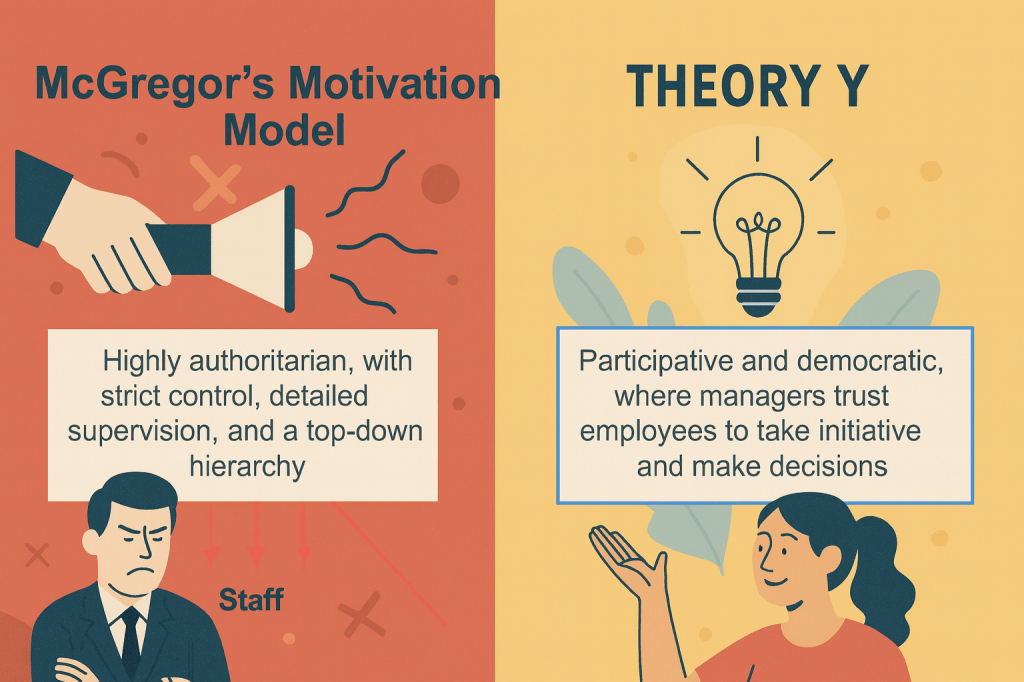
If you’ve ever wondered why some leaders inspire people to run through walls while others can’t inspire someone to run a PowerPoint, Douglas McGregor has an answer. Actually, he has two.
Welcome to Theory X vs. Theory Y, the OG framework of leadership mindset, still alive and well in 2025 corporate culture… sometimes thriving, sometimes gasping for air under layers of “initiative fatigue,” mandatory fun, and Slack messages that start with, “Quick question…”
Let’s break it down in Cari terms.
What Is Theory X?
Theory X leaders look at employees like a suspicious cat staring at a closed door:
“I don’t know what’s behind there, but I’m sure it’s up to no good.”
These leaders assume people:
- Hate work
- Need to be monitored
- Will take advantage the second your back is turned
- Require strict rules, tight timelines, and weekly “quick touch-base” meetings that are never quick
Theory X leadership thrives in environments where fear is the primary motivational strategy.
You know the vibe:
High surveillance, low trust, but hey, great spreadsheets.
What Is Theory Y?
Theory Y leaders? They assume people want to contribute.
They believe humans are naturally motivated, if you get out of their way, give them purpose, and don’t micromanage them into oblivion.
They assume people:
- Want to grow
- Enjoy being part of something bigger
- Will step up when trusted
- Don’t need to be tracked like Amazon warehouse scanners
Theory Y leadership is holistic, empowering, and rooted in respect.
It’s also the leadership style employees will follow even when things get messy.
Here’s the Plot Twist: You’re Not One or the Other
Most leaders like to say they are Theory Y while behaving like Theory X the moment pressure hits.
Nothing tests leadership theory faster than:
- A missed SLA
- A last-minute client demand
- A budget cut
- A performance issue that’s been “quietly tolerated” for six months
- Or my personal favorite: an executive whispering, “We need results… yesterday.”
Under stress, even the most heart-centered leaders can morph into:
“Where are we on that?”
“Please copy me on everything.”
“Who approved this?”
Don’t panic. It happens.
But self-awareness is the difference between a leader and someone who just has a bigger chair.
How to Know If You’re Leading with X or Y (Be Honest)
You’re leaning Theory X if you…
- Default to control when nervous
- Believe autonomy is “earned” not given
- Have policies that are longer than the employee handbook
- Feel uncomfortable unless you know every detail
- Call things “accountability” that are actually surveillance
You’re leaning Theory Y if you…
- Delegate freely and with clarity
- Ask questions instead of interrogating
- Trust others to figure things out
- Share information generously
- Create psychological safety on purpose, not by accident
Why Theory Y Wins in Today’s Workplace
Today’s workforce, especially post-layoff, post-quiet-quitting, post-everything, craves trust, inclusion, transparency, and leaders who actually see them as humans, not output machines.
Theory Y drives:
- Better engagement
- Better retention
- More innovation
- Higher emotional intelligence
- And fewer “I’m not sure if this is HR-safe, but…” conversations
Theory X may get short-term compliance, but Theory Y builds long-term loyalty.
Plus? Theory Y leaders sleep better. (The science is unconfirmed but the vibes check out.)
So, What’s a Modern Leader Supposed to Do?
1. Practice “Calm Leadership Under Pressure.”
Employees can feel your panic even through email.
2. Delegate with direction, not domination.
Clarity isn’t micromanagement. Shadowing people’s inboxes is.
3. Assume good intent until proven otherwise.
You can always correct course; you can’t un-break trust.
4. Replace surveillance with conversations.
Ask: “What do you need?”
Don’t ask: “What have you done?”
5. Build systems that support autonomy.
If your team needs a FAQ to get approval on small things… you’re making them think like robots.
Real Talk, Leader to Leader
Every leader has both X and Y inside them.
The question is: Which one is driving your team culture?
Your team doesn’t need perfection.
They need consistency, clarity, and a leader who knows when to guide, when to step back, and when to stop overthinking that one Slack message.
Modern leadership isn’t about choosing X or Y.
It’s about recognizing them, balancing them, and choosing the mindset that builds trust, not tension.
And that, my friend, is where the future of leadership is headed.
 Lead With Your Heart
Leave a comment