
Written by Cari Borden
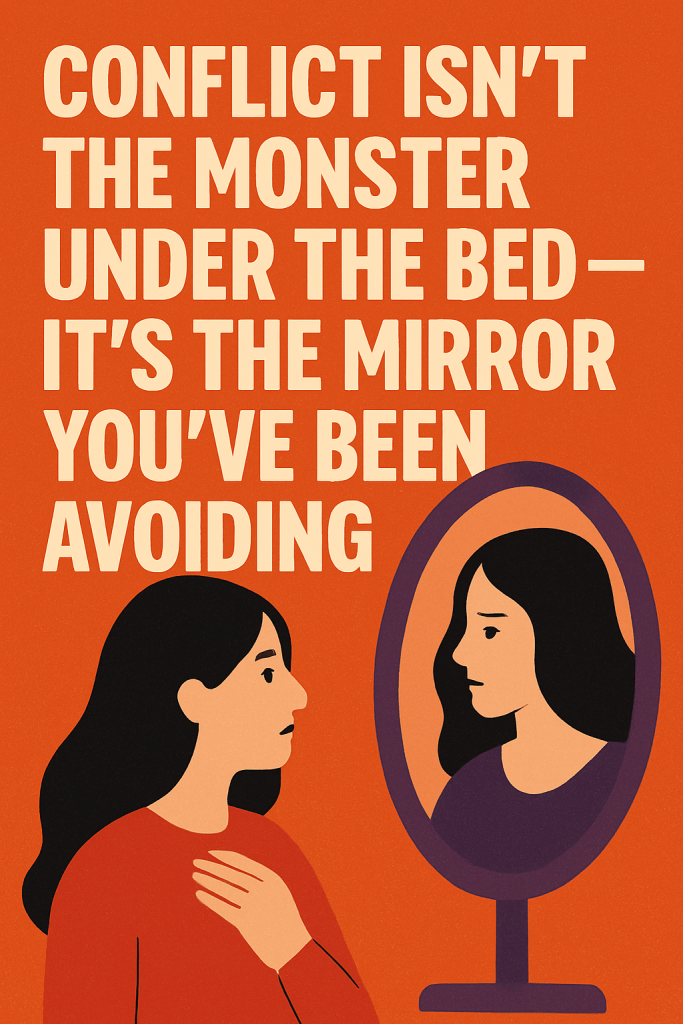
A Practical Guide to Becoming a Better Human (at Work and Everywhere Else)
Conflict has a terrible PR problem.
Most people treat it like the villain in their story, lurking, waiting to ruin relationships, derail meetings, and unleash chaos.
But here’s the truth:
Conflict isn’t the problem. Avoidance is.
Handled with emotional intelligence, conflict becomes:
- a clarity tool
- a feedback mechanism
- a personal growth accelerator
- a bridge to deeper trust and mutual respect
This guide will show you how to stop fearing conflict and start using it as a tool for growth, personally and professionally.
1. Reframe Conflict: It’s Not an Attack — It’s Information
Conflict isn’t a threat; it’s data.
It reveals:
- unmet needs
- miscommunication
- misaligned expectations
- hidden stressors
- values that feel compromised
When you stop taking conflict personally, you can start taking it constructively.
Reflection Prompt:
What is this conflict trying to teach me about myself or the situation?
2. Master the Pause (Your Nervous System Will Thank You)
Your first reaction is usually your worst reaction.
When conflict shows up:
- pause
- breathe
- release the tension
- keep your ego in the waiting room
Responding instead of reacting turns chaos into clarity.
Reflection Prompt:
What outcome do I want, and what response gets me closer to it?
3. Stay Curious, Not Combative
Curiosity softens conflict instantly.
Try shifting from:
- “You’re wrong” ➝ “Help me understand your perspective.”
- “That’s not what I said” ➝ “Here’s what I intended — what did you hear?”
- Assuming intentions ➝ Asking questions
Curiosity creates connection, even in disagreement.
Reflection Prompt:
What might I be missing from their point of view?
4. Find the Shared Goal — It’s Usually Right in Front of You
Most conflict stems from different routes toward the same destination.
Team chemistry transforms when you pivot from:
Me vs. You ➝ Us vs. the Problem
You’re not adversaries. You’re partners standing on different sides of the same issue.
Reflection Prompt:
What do we both ultimately want here?
5. Own Your Part — Even If It’s Only 5%
Accountability disarms defensiveness.
Ask yourself:
- Did I assume instead of clarify?
- Did my tone contradict my message?
- Did I communicate too late?
- Did I let emotions drive the moment?
Owning your part sets the tone for solutions.
Reflection Prompt:
What’s my honest contribution to this moment?
6. Set Boundaries Without Building Walls
Boundaries are clarity, not conflict.
Healthy conflict often sounds like:
- “Here’s what I need moving forward.”
- “This is the expectation I want us aligned on.”
- “I hear you, here’s what works for me.”
Boundaries prevent resentment and create trust.
Reflection Prompt:
What boundary would prevent this conflict from repeating?
7. Close the Loop: Unresolved Conflict Always Returns
A conflict isn’t resolved until:
- expectations are agreed to
- roles are clear
- next steps are aligned
- both sides feel genuinely heard
Otherwise, you’re only buying time until version 2.0 shows up.
Reflection Prompt:
How will we ensure this conflict doesn’t resurface in the same form?
Why this matters (especially for leaders):
When you develop healthy conflict skills:
- trust strengthens
- relationships stabilize
- alignment becomes easier
- decision-making improves
- your emotional maturity deepens
- and people feel psychologically safe around you
Great leaders aren’t great because they avoid conflict.
They’re great because they navigate it with clarity, courage, and curiosity.
✨ Conflict isn’t chaos. It’s clarity disguised as discomfort.
 Lead With Your Heart
Leave a comment