Written by Cari Borden
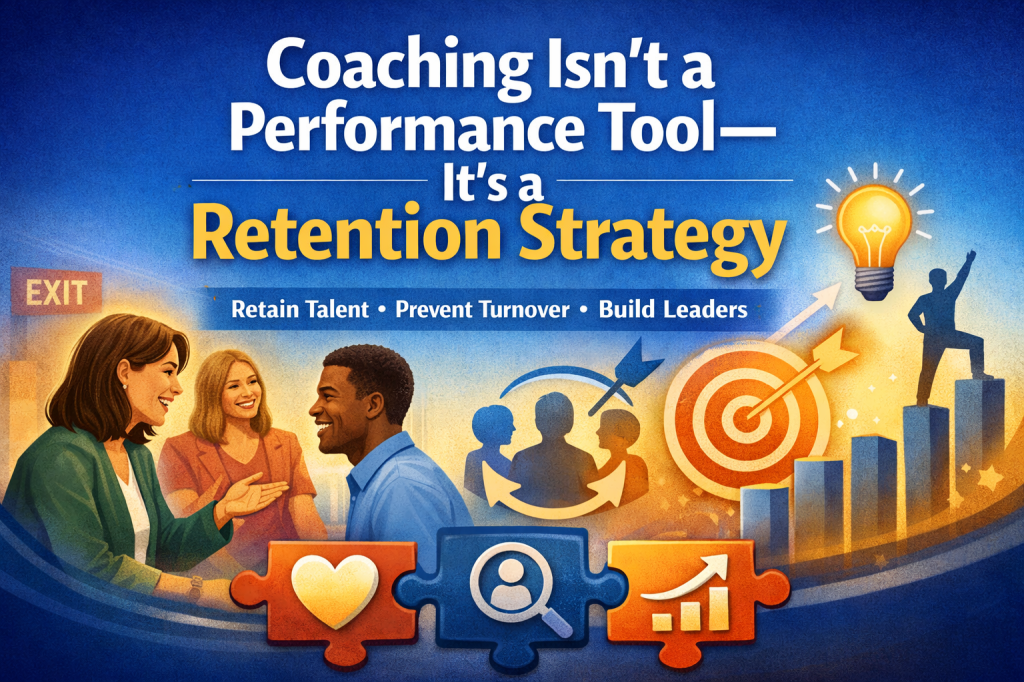
Why companies keep missing the real purpose of coaching (and why it’s costing them talent).
Most organizations still treat coaching like corporate mouthwash, something you only pull out when something smells off.
A dip in metrics?
A difficult employee?
A performance review gone sideways?
Then suddenly: “Let’s set up some coaching.”
But here’s the truth every modern leader needs to hear:
Coaching isn’t a corrective tool.
Coaching is a retention strategy.
A culture strategy.
A leadership pipeline strategy.
And when you misuse it, you lose people.
In this blog, we’re shifting the narrative, because behind every resignation, every quiet quitter, every disengaged high performer who mentally checked out months ago, there was a coaching conversation that never happened.
The Myth: Coaching Is for Performance Issues
For decades, coaching has been weaponized, something employees associate with being “in trouble.”
It’s positioned as the corporate equivalent of being sent to the principal’s office.
But great workplaces know the opposite is true.
Coaching isn’t a disciplinary step.
It’s a developmental one.
When you coach only when things go wrong, you condition your people to fear feedback, avoid honesty, and hide early signs of struggle, which ironically leads to the very performance problems you were trying to prevent.
The Reality: Coaching Builds Loyalty, Confidence, and Connection
Here’s the retention magic no one talks about:
People don’t stay because they’re scared of losing their job.
People stay because someone is invested in their growth.
Coaching creates:
1. Psychological Safety
Employees take risks, speak up, and innovate when they know the conversation won’t turn punitive.
2. Clarity and Confidence
Most people don’t fail because they lack ability.
They struggle because they lack direction.
Coaching gives them the map.
3. Emotional Support
Burnout doesn’t happen because of too much work.
It happens because of too little support.
Coaching fills that gap.
4. Stronger Leader–Employee Relationships
Humans don’t quit companies; they quit people who don’t see them.
Effective coaching says: “I see you, and your growth matters here.”
Coaching as a Retention Strategy: What It Actually Looks Like
This isn’t about more meetings.
It’s about better conversations.
✔ Weekly touchpoints that aren’t task check-ins
Real coaching asks:
What’s getting in your way? What’s one thing you want to get better at this month? What support do you need?
✔ Forward-focused feedback
Not “Here’s what you did wrong,” but:
“Here’s where you’re growing next.”
✔ Goals tied to strengths, not deficits
Retention skyrockets when people feel utilized, not criticized.
✔ Leaders trained in emotional intelligence
You cannot coach what you cannot connect with.
EI isn’t “nice to have.” It’s your retention engine.
✔ Coaching that’s proactive — not reactive
You don’t wait for a fire to buy a smoke detector.
Stop waiting for the exit interview to realize you needed coaching months ago.
The ROI: Coaching Pays for Itself
Turnover costs: recruitment, onboarding, lost productivity, leadership time, morale.
And yet companies will swallow all those costs while refusing to invest 30 minutes a week in meaningful coaching.
Let’s simplify:
Coaching builds skill.
Skill builds confidence.
Confidence builds engagement.
Engagement builds retention.
Your coaching rhythm is one of the strongest predictors of whether your people grow with you or grow away from you.
If You Want Your Talent to Stay, Coach Them Before They Struggle
Coaching is not about fixing people.
It’s about keeping them.
Keeping them engaged.
Keeping them learning.
Keeping them committed.
Keeping them growing inside your organization instead of someone else’s.
When you treat coaching as a performance tool, you get compliance.
When you treat coaching as a retention strategy, you get leaders.
And leaders don’t leave.
They build the future of your organization.
Final Thought
If companies reframed coaching as an investment instead of an intervention, turnover rates would drop, morale would lift, and leadership pipelines would finally make sense.
Coaching isn’t a luxury.
It’s your competitive advantage.
If you’re ready to build a coaching culture that keeps people, not just corrects them, explore my leadership development blogs, trainings, and coaching programs.
Because retention doesn’t start with perks.
It starts with conversations.
 Lead With Your Heart
Leave a comment