Written By Cari Borden
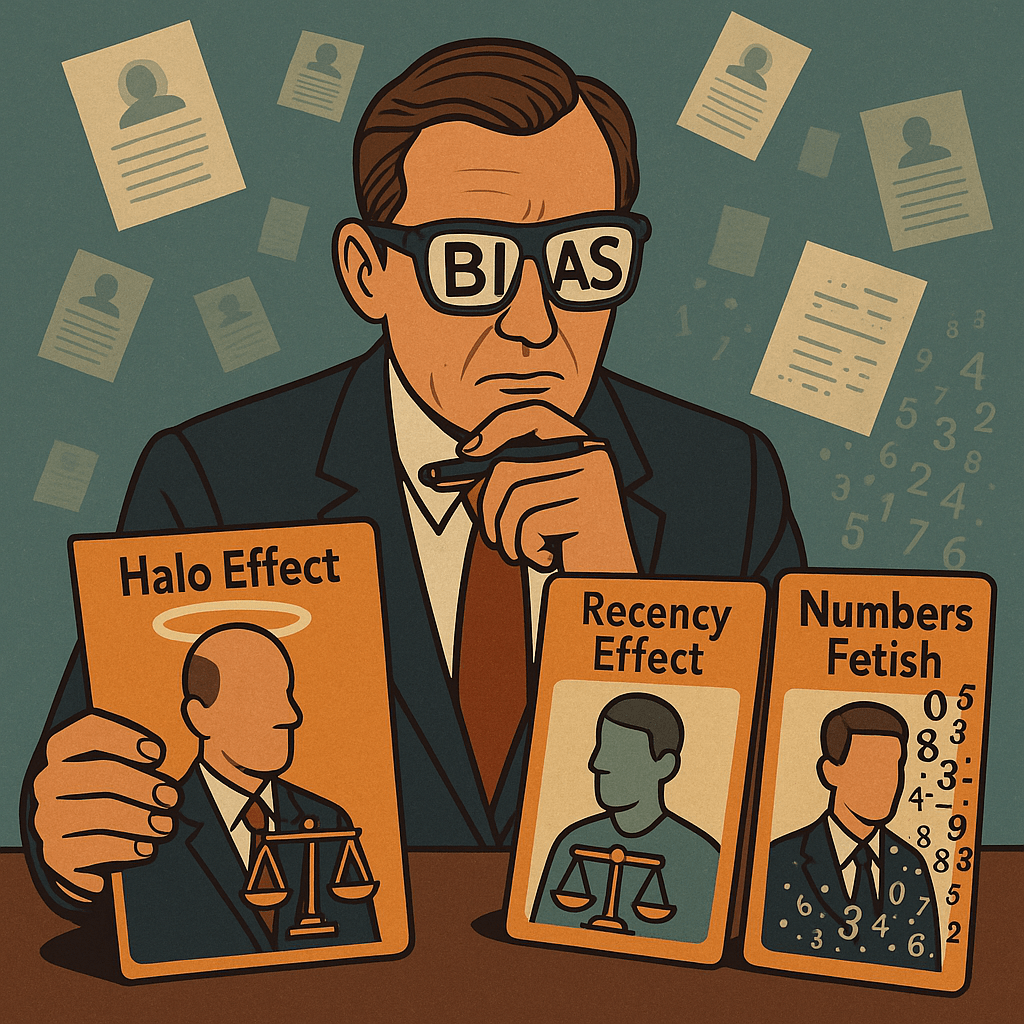
Let’s be honest, most performance reviews aren’t about performance.
They’re about perception.
And perception, in corporate hands, is often dressed up bias.
What’s sold as a “measured assessment” is often a psychological minefield of favoritism, fear, and fuzzy math, where numbers and narratives quietly decide your worth.
Once upon a time, performance reviews were meant to develop people.
Now, they often exist to defend decisions.
Leaders walk into evaluations with unconscious stories already playing in their heads, the good worker, the difficult one, the one who “has potential,” and the one who “just doesn’t fit.”
And those stories are driven by bias, dressed up in HR language.
Let’s call them out for what they are:
- The Halo Effect – When one good trait blinds the reviewer to everything else. That “star performer” might deliver results but leave chaos in their wake. Yet, they still get glowing marks because they “shine in meetings.”
- The Central Tendency – The classic “play it safe” move. Everyone gets a middle score because the leader doesn’t want conflict. Congratulations, no one improves, but at least nobody’s feelings were hurt!
- The Contrast Error – When employees aren’t measured against clear standards, but against each other. One high achiever enters the mix and suddenly everyone else looks average, even when they’re exceeding expectations.
- The Leniency Error – Bias disguised as kindness. Some leaders just can’t handle difficult conversations, so they inflate scores. The result? Mediocrity masquerading as mastery.
- The Recency Effect – Because apparently, the last 30 days matter more than the previous 11 months. One good week or one bad day can rewrite an entire year.
- The Numbers Fetish – My personal favorite. It’s when organizations pretend that assigning a decimal point to performance makes it objective. “You’re a 3.7 out of 5!” Because clearly, human growth is best expressed in fractions.
🪞 The Real Question:
If reviews were truly about growth, why do so few people actually grow after them?
Because feedback without coaching is just criticism in a nicer font.
And leaders who haven’t examined their own bias can’t possibly evaluate others fairly.
We’ve built systems that reward like-mindedness, compliance, and optics, not courage, creativity, or authenticity.
🌱 How to Fix It:
- Train leaders to recognize these six biases before they pick up a pen.
- Base reviews on observable behaviors, not personality judgments.
- Use multi-rater feedback (self, peer, and leader) to balance perspective.
- Audit your performance data to spot patterns of favoritism or inconsistency.
- Link every comment to a coaching action plan, not a personal label.
Accountability should work both ways. If you can measure an employee’s performance, you should also measure a leader’s ability to develop people, not just score them.
💡 Closing Thought:
Performance reviews should empower, not embarrass.
But until leaders see feedback as a mirror, not a megaphone, the illusion of fairness will keep its grip on corporate life.
🔗 CTA:
If you’re done being defined by someone else’s bias in a blazer, check out my leadership coaching gig on Fiverr or dive deeper into real talk at LeadBoldly1.blog.
Because growth deserves better than a 3.7.


Leave a comment